

An Ode to the Dandelion
|
Photo: Abi Saeed |
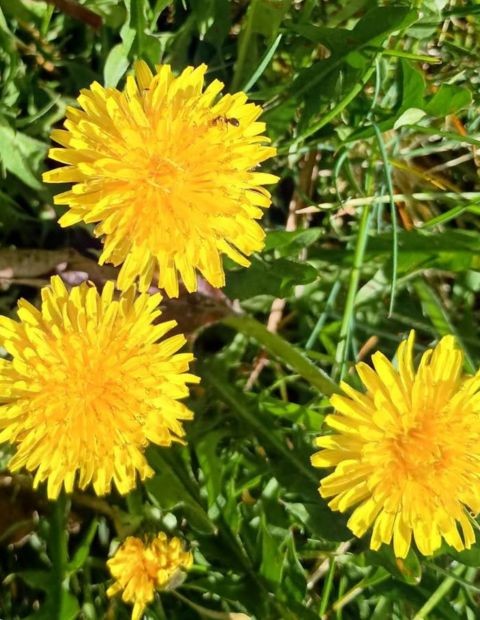
Arguably one of the most famous “weeds” in North America, dandelions can be a polarizing subject. Whether you love them, hate them, or find yourself somewhere in the middle, it’s not difficult to want to learn more about one of the most infamous and recognizable plants in the world.
THE DANDELION
Dandelions (Genus: Taraxacum) are a widespread genus in the Aster family that can be found in most parts of the world. Although there are ~250 species, the most common and widespread are the Common Dandelion (Taraxacum officinale) and the Red-seeded Dandelion (Taraxacum erythrospermum), both of which originate from Eurasia but are now naturalized in many parts of the world, including Montana. This article will focus on these two most common species.
These short-lived perennial plants reproduce sexually (through seeds) and asexually (through the roots), while withstanding a variety of climates and soil conditions. Starting as a rosette of lance-shaped leaves, they produce the characteristic yellow flowers in early spring, followed by the distinct seed-heads which contain individual seeds attached to a tuft of hairs that aid in wind dispersal. Dandelions are also well-known for their taproot, which contributes to the plant’s drought tolerance and allows it to compete well with other vegetation for limited resources.
DANDELIONS AS AN EDIBLE PLANT
Almost every part of the dandelion, from taproot to flower head, is edible, except for the stems, which contain a bitter, milky latex. European settlers intentionally brought these plants to North America for their nutritional and medicinal value. Growing alongside vegetable and herb plantings, they were used as food and remedies. The nutritional value of dandelions is comparable to salad greens like spinach. Their leaves are high in potassium, calcium, and iron, and roots can have diuretic and laxative properties.
If you choose to eat dandelions, collect them from a safe location, make sure that they have not been treated with any chemicals, and wash them thoroughly to remove any soil, debris, or insects.
DANDELIONS AND POLLINATORS
The science behind the value of dandelions for pollinators is not black and white. Although dandelions can be convenient sources of carbohydrates for pollinators in highly urbanized landscapes, they are not the most nutritious and well-rounded food source. While some think that dandelions are the earliest flowering plants blooming in the spring, many early flowering trees and shrubs, spring bulbs, and native wildflowers beat dandelions to the punch. Although there are many higher-quality flowering plants for pollinators, dandelions can still be among the most widespread, consistent and visible sources of nectar and pollen in some landscapes.
Research shows dandelions attract many pollinator species, indicating their importance as a food source where other floral resources may be scarce (such as highly urbanized areas). Research also shows that dandelions do not have the most nutritious pollen. They lack certain essential amino acids and fatty acids necessary for pollinators such as managed honey bees and wild native bees. Although they can offer a quick source of energy, they are not a well-rounded and nutritious meal. We also know that pollinators need a varied diet with floral resources available all season long, including early and late in the growing season. Although there are countless flowering plants that may be more nutritious for pollinators, dandelions still have a place on that list until more intentional pollinator-friendly plantings are widespread in all landscapes.
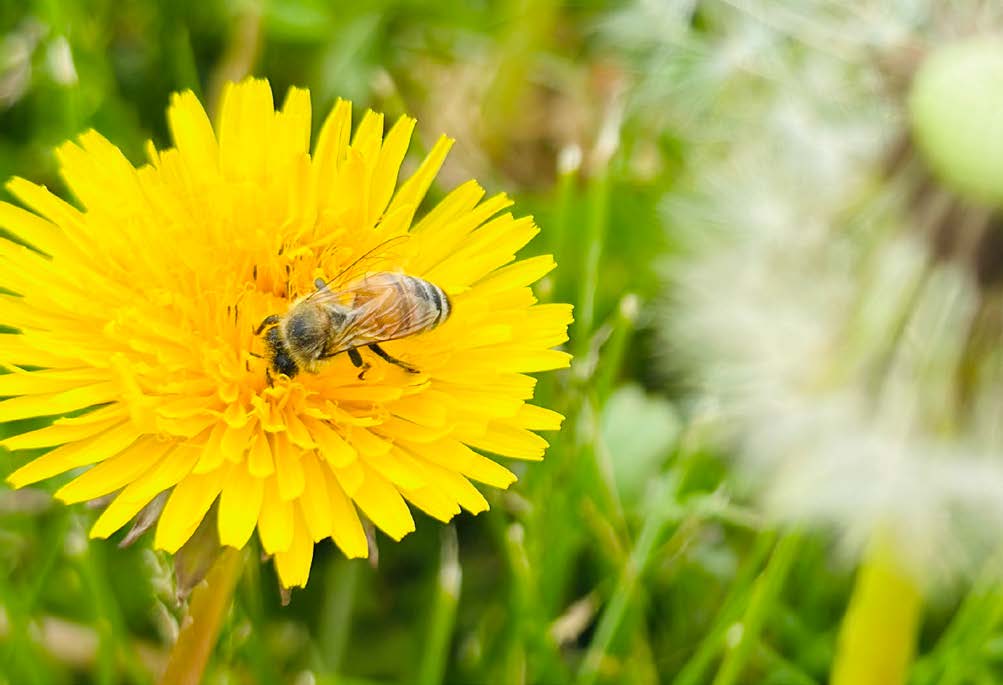
Photo: Hannah Metcalf
DANDELIONS AS A WEED
Dandelions are undoubtedly a resilient plant in many landscapes, popping up in lawns, through dense vegetation, in gravel roads and driveways, etc. They are commonly considered a weed largely due to their ability to grow in conditions unfavorable to cultivated plants. Some research even shows that dandelions can compete with native plants for resources.
In home garden settings, whether something is a weed is usually subjective. Although some embrace a few dandelions speckled in a lawn, large swaths of dandelions in the place of what used to be turfgrass usually indicate a problem beyond dandelions themselves.
One of the best ways to combat dandelions in turf lawns is to make sure that turfgrass is healthy, allowing it to outcompete weedy vegetation. Maintaining turf health through responsible management, including effective nutrient and water application, and addressing issues such as diseases, pests, and soil compaction can help reduce dandelion issues. Mechanical removal is also very effective for controlling dandelions. Using a tap-root removal tool, such as the dandelion fork, can remove plants without much exertion. Remove as much of the root as possible for best control.
Several herbicide options are also available. Broadleaf herbicides such as 2,4-D, dicamba, and MCPP (commonly found in ‘weed and feed’ turf fertilizer products) can be effective for dandelion control in lawn settings. Spot-treating individual plants using an appropriately labeled broadleaf weed killer is more effective than a broadcast application across larger areas. Late summer and early fall are the best times to control perennial weeds such as dandelions (remember that herbicides may kill desirable plants — so use them responsibly and sparingly). Always read and follow label directions, and if unsure, reach out to your local MSU Extension office for assistance.
Abiya (Abi) Saeed is the MSU Extension Horticulture Specialist.
This article is adapted from Abi Saeed’s original article on the Garden Professor’s
Blog from May 2025: gardenprofessors.com/an-ode-to-the-dandelion
Disclaimer: These recommendations are provided only as a guide. It is always the pesticide applicator’s responsibility, by law, to read and follow all current label directions for the specific pesticide being used. Due to constantly changing labels and product registration, some of the recommendations given in this writing may no longer be legal by the time you read them. If any information in these recommendations disagrees with the label, the recommendation must be disregarded. No endorsement is intended for products mentioned. The authors and Montana State University assume no liability resulting from the use of these recommendations.