

Working in Montana's Streams and Rivers
An overview of the 310 Law
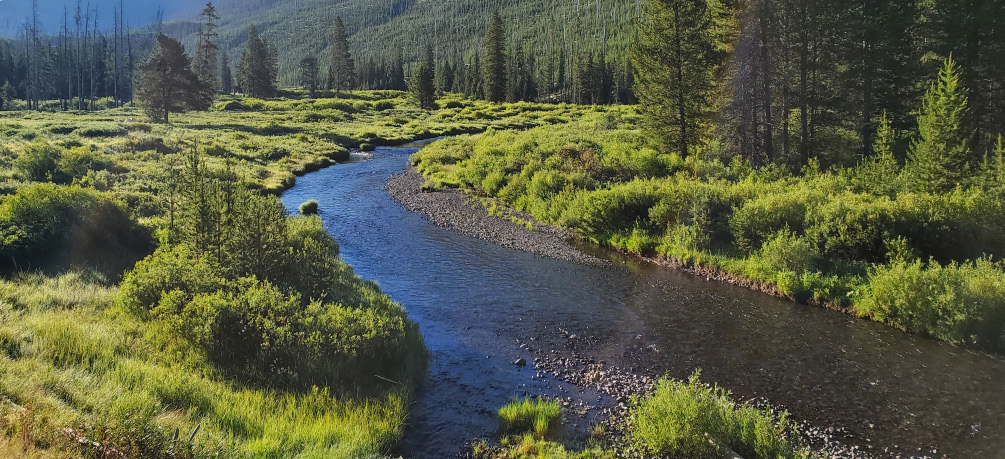
Photo: Ann Maroso
Montana’s Natural Streambed and Land Preservation Act, commonly referred to as the 310 Law, was established to regulate private projects in or near perennial streams. Anyone planning such activities is required to first obtain a 310 permit from their local conservation district. Conservation districts throughout Montana are responsible for administering the 310 Law, and there is no fee for a 310 permit.
PERMIT APPLICATION PROCESS
Any private, nongovernmental individual or entity planning a project that will impact the bed or immediate banks of a stream on public or private land must contact their local conservation district to obtain a permit application before beginning any work near a perennial-flowing stream.
PURPOSE AND SUSTAINABLE PRACTICES
The primary purpose of the 310 Law is to ensure projects on perennial streams are completed in ways that minimize impacts and protect the stream in its natural and existing state. While rock riprap is a common choice for bank stabilization during stream projects, sustainable and habitat-friendly alternatives are available. Natural materials such as willow lifts (layers of soil, biodegradable fabric, and willow cuttings that root), woody debris, and biodegradable fabric wraps can be used to stabilize stream and river banks against erosion.
PARTNERSHIPS AND HABITAT PROTECTION
Conservation districts collaborate with Montana Fish, Wildlife & Parks to ensure that all 310 permit-related construction activities minimize damage to wildlife habitats and do not negatively impact downstream water users.
EMERGENCY PROVISIONS
The 310 Law includes provisions for emergency actions necessary to protect life or property, including growing crops. If emergency work is needed, landowners must notify their local conservation district within 15 days, describing the actions taken and their reasons. The conservation district will review the emergency actions to determine if they were appropriate, require modification, or mandate removal and/or replacement.
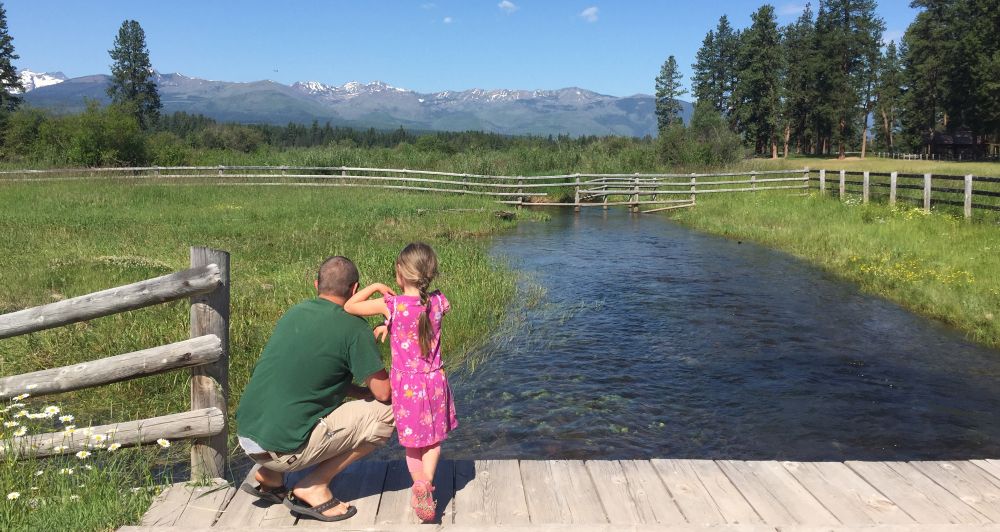 Photo: Erika Malo
ADDITIONAL PARTNERSHIPS AND RESPONSIBILITIES
Projects near water may require additional permits. The State of Montana created the Joint Application for Proposed Work in Montana’s Streams, Wetlands, Floodplains, and Other Waterbodies to simplify the permitting process, allowing landowners to complete one form and make copies to submit to various agencies that may require a project permit. Participating agencies include local conservation districts, Montana Fish, Wildlife & Parks, Montana Department of Natural Resources and Conservation, the U.S. Army Corps of Engineers, and local floodplain authorities. Landowners purchasing or owning land near a perennial stream or river are advised to familiarize themselves with the relevant regulations if planning any work that may require permits. Getting in touch with the local conservation district is a great first step in that education. Activities requiring permits include, but are not limited to:
- Bridges, culverts, or their removal/repair in a perennial stream.
- Bank stabilization (riprap, etc.).
- Fences, decks, or recreational structures near streams.
- Agricultural works (irrigation diversions, headgates, ditches).
- Dams, ponds, or channel/bank alterations.
- Utility installation/maintenance, sandbagging, debris removal.
VIOLATIONS AND PENALTIES
Anyone who works without a 310 permit, operates outside the scope of a 310 permit, or violates emergency procedures is committing a misdemeanor, subject to criminal or civil penalties, and may be found liable for the cost of restoration. Many people are not aware of the 310 Law, and conservation districts often work cooperatively with people to correct violations before enforcing penalties.
The goal of the 310 Law is to protect streams in their natural and existing state for the benefit of all Montanans, not to create cumbersome regulations. The 310 permit is free, and the application process provides an opportunity to plan for best management practices and consult with people who understand Montana’s natural resources. To find your local conservation district, visit the Montana Association of Conservation Districts online at macdnet.org and click on ‘Districts’ to reach a map with contact information for every county.
Wendy Jones is the Lower Musselshell Conservation District Administrator.