

Community Garden Growth in Helena
Master Gardener Spotlight
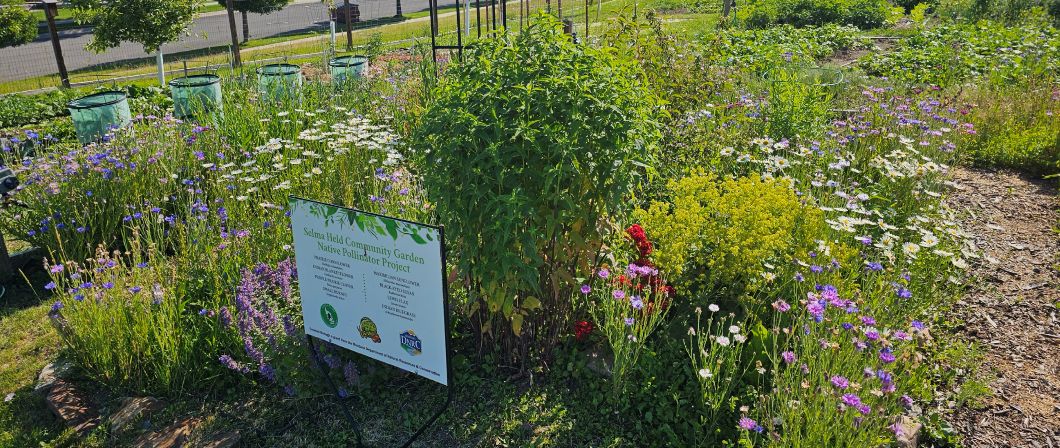
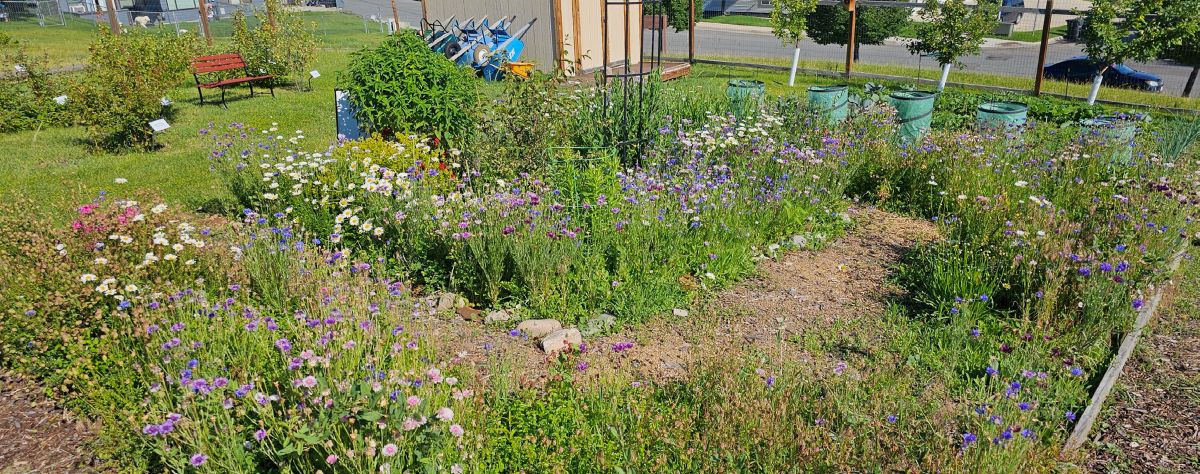
Photos: Roger Stone
To plant a garden is to believe in tomorrow. - Audrey Hepburn
Somewhere around 2009, Audrey Hepburn’s quote “To plant a garden is to believe in tomorrow,” inspired a low-key community garden project in the City of Helena. It started as the Growing Community Project (GCP) under the nonprofit organization called Working for Equality and Economic Liberation (WEEL). A diverse group of individuals and organizations shared a vision of community gardens within walking distance of every neighborhood in Helena. GCP’s mission was to build community gardens, with community support, to bring together diverse neighborhoods, creating community while addressing food security and social justice issues.
After its inception, the organization’s growth soon outpaced the capacity of the organizational home to support it. In 2012, as an all-volunteer effort, Helena Community Gardens (HCG) obtained its own nonprofit status, created a strategic plan, and rebranded itself. By mid-2013, as a bona fide 501(c)(3) organization, HCG created a volunteer Board of Directors. Today, HCG has eight board members (two are master gardeners) and a part-time, paid Executive Director, all with a strong interest in and passion for sustainable, homegrown food.
 Over 17 years, the number of gardens in HCG has ebbed and flowed as the community
has changed. In 2026, HCG consists of eight gardens in Helena and one in East Helena:
Over 17 years, the number of gardens in HCG has ebbed and flowed as the community
has changed. In 2026, HCG consists of eight gardens in Helena and one in East Helena:
- Cooney Homes (Private) – Ten 4x8 foot raised beds.
- Covenant* (St. Paul’s United Methodist Church) – Thirteen various sizes.
- Cruse Overlook (UMC) – Sixteen 4x8 foot raised beds.
- Jubilee* (St. Mary’s Catholic Church) – Ten 10x20 foot in-ground beds; twenty 4x10 foot raised beds; ten 4x10 foot accessible beds.
- Plymouth* (United Congregational Church) – Fourteen 4x10 foot and thirteen 12x20 foot raised beds.
- Selma Held* (City of Helena) – Twenty-six 4x12 foot raised beds; fifteen 18x18 foot in-ground beds – all forty-one beds are accessible.
- Sixth Ward* (City of Helena) – Thirty-five 4x10 foot raised beds.
- Waukesha* (City of Helena) – Forty-three 20x40 foot in-ground beds (some divided in half).
- East Helena – Thirty 10x20 foot in-ground beds.
*Gardens with pollinator plots.
Most years see the majority of these 225 garden beds rented by multiple generations of people. This year, as of June 1, 193 beds are being used. In addition to growing their own food, gardeners donate extra produce to the Helena Food Share. In 2025, gardeners donated 1,113 pounds of produce. Eight of the gardens have plots specifically dedicated to growing vegetables for donations to Food Share. In addition, HCG gardeners donated a combined 2,000-plus volunteer hours in their respective gardens.
Approximately one-third of HCG’s annual budget comes from plot fee revenue; the rest of the funding comes from sponsorships, grants, fundraising events, and donations. Within most grants is the requirement to describe how and what an applicant can contribute. Currently, volunteer time is subjectively worth about $34 per hour — a not-insignificant amount — which means that those 2,000 hours are worth roughly $68,000 in support value when applying for a grant.
The volunteer support that helps with the garden care and with securing grants means that HCG can continue its long-held vision for gardens and community growth that are accessible to everyone.
Roger Stone is a Master Gardener in Lewis and Clark County.