


NAS Newsletter Issue 1
November 2025
Indigenous Peoples Day celebrated at Montana State with dedication of Elouise Cobell Garden Arbor
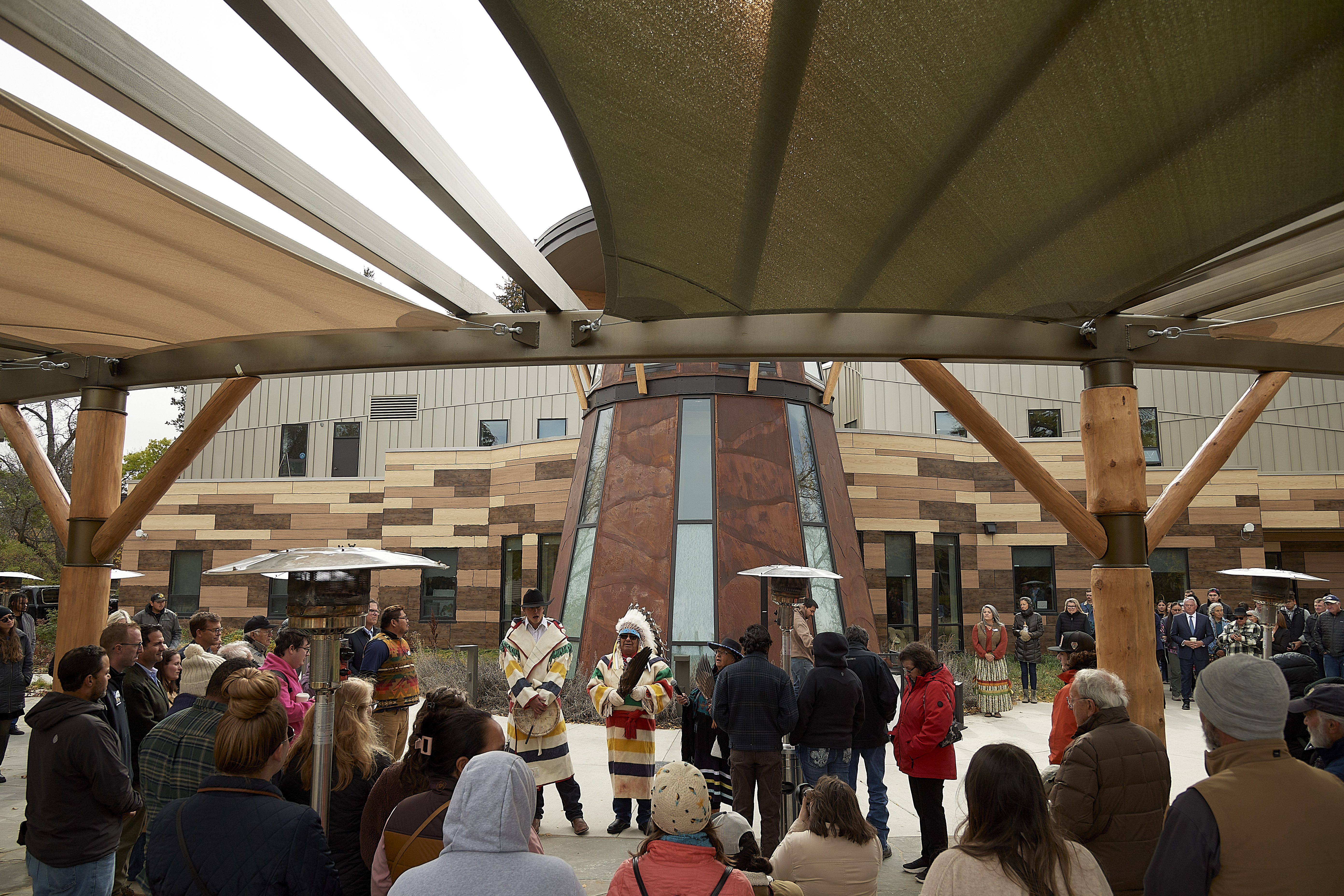
Around 250 people gathered at Montana State University’s American Indian Hall to celebrate Indigenous Peoples Day and dedicate a new arbor that completes the vision of the facility. The Oct. 13 event, hosted by the Department of Native American Studies, featured remarks from MSU and tribal leaders and an honor song from musician Chontay Standing Rock, with refreshments provided for attendees and art on display by artist Winold Reiss. The arbor is dedicated to the late Blackfeet tribal elder and activist Elouise Cobell, who was educated at MSU and received an honorary doctorate in 2002. Cobell’s son, Turk, and daughter-in-law, Bobbie, attended the event in her honor.
Walter Fleming, former head of the Native American Studies department who retired this past summer, called the arbor the “final puzzle piece” that completed the $20 million American Indian Hall facility, which opened in 2021 after years of planning and fundraising. Previous groundbreaking and grand opening ceremonies for the hall were also held on Indigenous Peoples Day. “I can sleep tonight knowing that that puzzle is done,” Fleming said. “I'd like to thank all of our donors, many of them who are here today, who gave us the final puzzle piece to make this building complete.”
The arbor was always a part of the building’s design, but the necessary funds to include it were not available when construction began. The daughter of donor Elise R. Donohue, who died in 2015, donated the money to complete the arbor. Following indoor remarks, crowds of people gathered around heat lamps to view the Elouise Cobell Garden Arbor, which is located outside between the Drum Room in American Indian Hall and the Native learning garden. Tribal elders delivered a blessing of the ground and the building and performed ceremonial songs.
“As we bless this place today and hear reflections from our Native students and educators, I invite you to consider the power of place, the importance of community and the enduring strength of the Indigenous knowledge systems,” said Meredith Hecker, head of the Native American Studies department. “This garden is a place for learning, for gathering and for healing, and it belongs to all of us.”
The arbor complements the circular design of American Indian Hall and was structured to be an outdoor educational area that softens the space between the built and natural environments. Large boulders provide a natural seating area around a fire pit, which completes the building design’s inclusion of the four elements of earth, wind, water and fire.
The arbor will be a gathering space for meetings and special events, and faculty who wish to use the space for a class can reach out to the Native American Studies department, Hecker said. She thanked the designers, architects and builders of the space for centering Indigenous voices and values throughout the process.
Elizabeth Pritchard of MSU Planning, Design and Construction spoke highly of the collaboration involved in building the arbor. “The kindness and willingness to communicate about the important pieces of the site and the building truly just changed my life,” Pritchard said. “Communication with the Buffalo Nation fellows and their willingness to teach was an incredible gift and one that I'll take forward with me forever.” MSU President Brock Tessman also highlighted the significance of the garden arbor and its namesake to himself, faculty and the more than 800 Native American students currently attending MSU.
“It is absolutely an honor for Montana State University, and certainly for me, to be connected in any way to Elouise (Cobell) and her legacy,” Tessman said. “To have the garden arbor named for such a landmark person in Native American history is very significant to me and to this university.”
Cobell’s work exemplifies the mission of MSU, said Robert Rides At The Door, a tribal elder performing blessings and prayers, and demonstrates that education is the best way to resist oppression. Cobell was the lead plaintiff in the largest class action lawsuit in the history of the United States, which contested the U.S. government’s mismanagement of trust funds held by more than 500,000 Native Americans and resulted in a settlement of $3.4 billion. She was posthumously awarded the U.S. Presidential Medal of Freedom for her impacts in 2016 by former President Barack Obama.
Highlighting the dedication to Cobell, Hecker said the arbor is more than just a structure. “It's a living symbol of growth, resilience and reflection,” she said. “It stands as a tribute to Indigenous voices, both past and present.”


Click on an image to view as a slideshow.

From Learners to Leaders
Alumni leading in education, advocacy and community
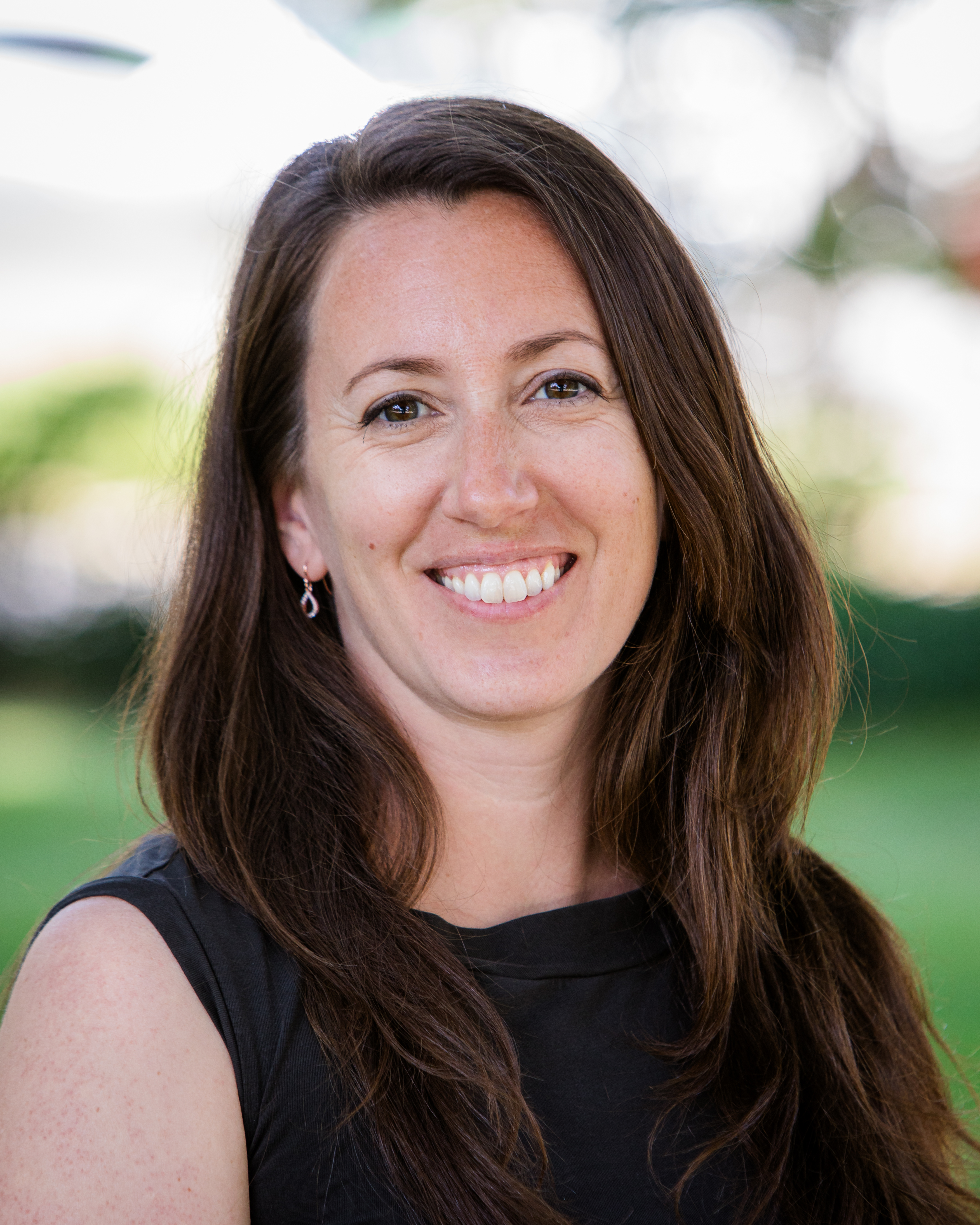
Dr. Amy Gore is a graduate of Montana State University, earning her master’s degree in Native American Studies from 2008-2011. She is now an associate professor of English at North Dakota State University, where she specializes in early and nineteenth-century American literature, book history and print culture, and Native American literature. Her publications include Book Anatomy: Body Politics and Materiality in Indigenous Book History (2023) and Gatherings: New Directions in Indigenous Book History (forthcoming with the University of Pennsylvania Press). Additional scholarship appears or is forthcoming in Studies in American Indian Literature, Resources for American Literary Study, Publications of the Bibliographical Society of America, Pedagogy, Western American Literature, and several edited collections. Many of her publications include works of Native literature that she read for the first time in her NAS classes at Montana State.
How did your time in the department shape your personal or professional path?
I moved to Montana, sight-unseen, from the East Coast to join the MSU’s Native American Studies program as a graduate student. I knew that I wanted to continue studying Native literature and had already been taking graduate classes for a master’s degree in American literature, but I felt strongly that I also needed cultural training in Native history and culture to be able to successfully study Native literature. I’m so thankful that I did—my time in the NAS program, taking classes from Native professors and with Native classmates, gave me critical insights into how to understand Native literature. My classes with non-Native professors like Dr. Matt Herman also provided me with models on how to be an ally.
Looking back, what values or lessons from your time at MSU continue to guide your work?
One of the basic principles that I learned in the NAS program is “nothing about us without us.” It means that all things pertaining to Native peoples should prioritize and include Native perspectives, consent, feedback, participation, and collaboration. Now as a professor myself, I offer college classes on Native literature and Native studies, and I coordinate my institution’s Tribal and Indigenous Peoples Studies minor. In both of these roles, I prioritize centering Native perspectives and building partnerships with Native peoples and communities, a lesson that I learned through my time in the NAS program. I’m so grateful for this guidance and for the ways that it’s helped me become a better teacher, researcher, and ally.
Curious where your classmates are at now? Catch up with fellow graduates and expand your network on LinkedIn.

Stories from the Circle
Highlights from NAS Academics and Student Success Past Events
On Storied Ground: Blackfeet Author Sterling HolyWhiteMountain at American Indian Hall
The Ivan Doig Center for the Study of the Lands and Peoples of the North American West, in partnership with Montana State University’s Native American Studies, English, and American Studies Departments, was pleased to
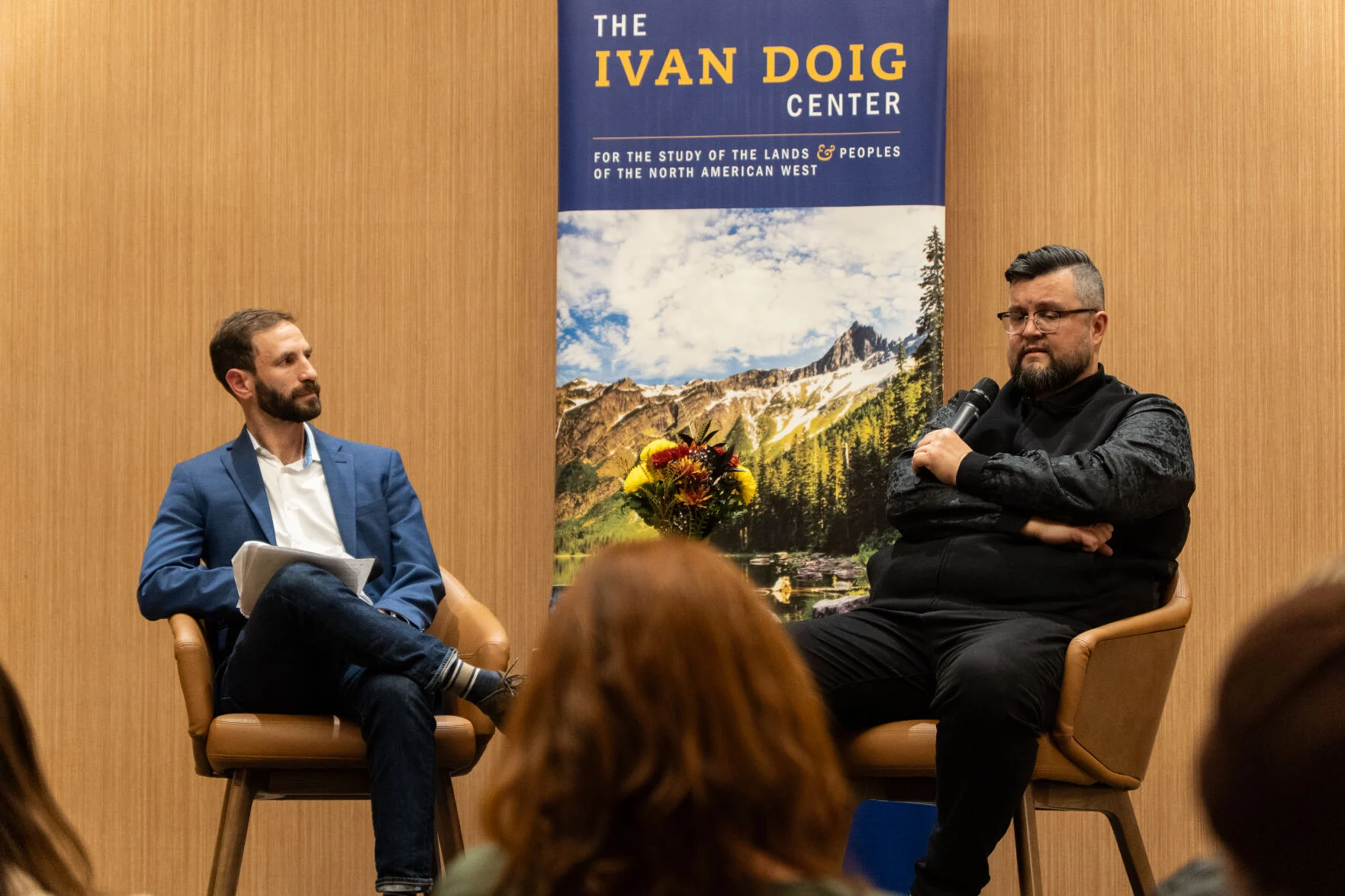
host author Sterling HolyWhiteMountain in conversation with Doig Center Director Daniel Grant as part of the Doig Center’s “Perspectives on the American West” speaker series on October 24, 2025 in the Great Hall of American Indian Hall at MSU.
Sterling HolyWhiteMountain is a Jones lecturer at Stanford University, where he formerly held a Stegner fellowship. His work has appeared in The New Yorker, The Atlantic, and The Paris Review, ESPN, High Country News and Montana Quarterly, among other places. He is an unrecognized citizen of the Blackfeet Nation.
The event, titled "On Storied Ground," was attended by approximately 80 people from MSU and the broader public. Department Head of Native American Studies Meredith Hecker said, “We are honored to welcome Sterling HolyWhiteMountain to MSU. His work challenges us to think deeply about identity, place, and the power of storytelling in Native communities. Events like this are amazing opportunities to help foster understanding and dialogue across cultures.”
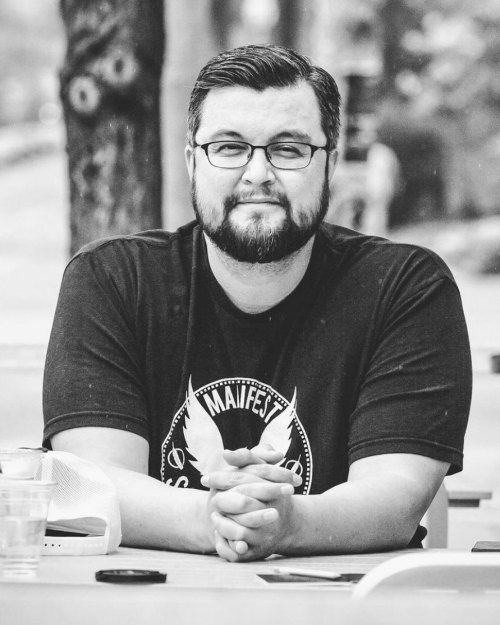
The wide-ranging conversation explored a number of timely and relevant topics, including Native citizenship, authenticity and responsibilities of Native artists, the influence of Blackfoot culture on HolyWhiteMountain's writing, the James Welch Native Literary Festival he directed, and the role of literature as a form of intercultural connection and self-transcendence.
Doig Center Director Daniel Grant said, “HolyWhiteMountain’s writing belongs in the company of great Native fiction writers Louise Erdrich, Tommy Orange, James Welch, and N. Scott Momaday, and is among the newest, most compelling voices shaping the contours of the literary American West today.”
Learn more about this event and our partnership with the Ivan Doig Center for the Study of Lands and People.
Welcoming Waikato: Strengthening International Partnerships with Māori relatives
NAS recently hosted a delegation from the University of Waikato, including their Deputy Vice-Chancellor Māori, Dr. Sara-Jane Tiakiwai, for an exploratory collaborative meeting between our two institutions. The visit centered on exploring future partnerships and beginning conversations about a reciprocal Indigenous knowledge exchange for students.
Together, we are working toward creating an ongoing relational network that supports meaningful, long-term collaboration. One shared goal is to develop an opportunity for Waikato students to come to MSU for an Indigenous Knowledge Exchange during an upcoming academic season, pending funding support.
This meeting follows the successful completion of our 3-credit EDU course and accompanying study abroad trip to Aotearoa, New Zealand, where MSU honors students engaged in an immersive Indigenous knowledge exchange with Māori partners. Building on this momentum, we hope to continue strengthening these cross-cultural relationships in the years ahead.
For more information, please contact maleeya.knowshisgun@montana.edu.


Click on an image to view as a slideshow.
Celebrating Horse Medicine: Chief Phillip Whiteman Jr and Hunter Old Elk Lead Event
The sun came out to make an appearance on MSU’s Centennial Mall to welcome Northern Cheyenne Chief Phillip Whiteman, Jr (Yellowbird) and Apsáalooke/ Yakama Hunter Old Elk (Woman in the Front) for the beloved Horse Culture event on November 5th hosted by American Indian/Alaska Native Student Success Services (AIANSSS) in collaboration with the Department of Native American Studies and the College of Agriculture.
Chief Whiteman and Old Elk were joined by MSU’s President Tessman, and the College of Agriculture’s Dean Bajwa, alongside American Indian Council Co-President Michaiah Pease and Miss Indian MSU Angelina Toineeta. Old Elk’s family helped ignite a powerful movement to revive traditional horse regalia, which she used to showcase the art and spirit of Plains horsemanship on campus. Chief Whiteman shared his knowledge and demonstration as a Northern Cheyenne traditional chief coming from a long line of chiefs and horse people, who are caretakers of horse medicine and songs.
Horse Culture started in 2023 as the brainchild of agriculture education student Angelina Toineeta when she approached Assistant Director of AIANSSS, Nicholas Ross-Dick, about hosting horse painting on campus. The horses in this event are from the MSU’s Equine Science program, and students in the Equestrian Safety & Handling course care for the horses during the duration of the event. The third year of Horse Culture marks the continuous work of connections and relations across campus.


Click on an image to view as a slideshow.
Aaniiih Instructor Terry Brockie Shares Plains Sign Language with MSU Community
Terry Brockie (Red Belt) from the Fast Travelers clan of the Aaniiih Nation on the Fort Belknap Indian Reservation joined the American Indian/Alaska Native Student Success Services (AIANSSS) for three sessions of Plains Sign Language in collaboration with Maleeya Knows His Gun, Montana State’s Cultural Programming Coordinator of the AIANSSS.
Brockie learned Plains Sign Language by signing with his father-in-law and family during ceremonies and community events. Brockie’s passion lies in preserving and revitalizing Tribal language, history, and ceremony. As such, he currently teaches the Aaniiih language at Aaniiih Nakota College in Northern Montana. Students who attended Brockie’s sessions shared meals together and learned basic conversational skills in the Great Hall of American Indian Hall at Montana State University.
If you would like to join us for more language courses, the next workshop in the Tribal Language Program will be a Blackfeet Language class with MSU student Kolton Running Crane, tentatively set for February 5th, 2026, from 5-7pm.


Click on an image to view as a slideshow.
More Than a Game: American Indian Council and Bobcat Football Celebrate Native American Heritage Month
On Saturday, November 15th, the American Indian/Alaska Native Student Success Services (AIANSSS) celebrated Native American Heritage Month in historic collaboration with the American Indian Council and Bobcat Football. It was another win for the Bobcats with a final of 38 - 17. The American Indian Council proudly represented on Saturday with members of the Executive Council and the Bobcat Singers standing alongside players, members of the Rodeo Team, Spirit of the West, and the Cheer Squad.
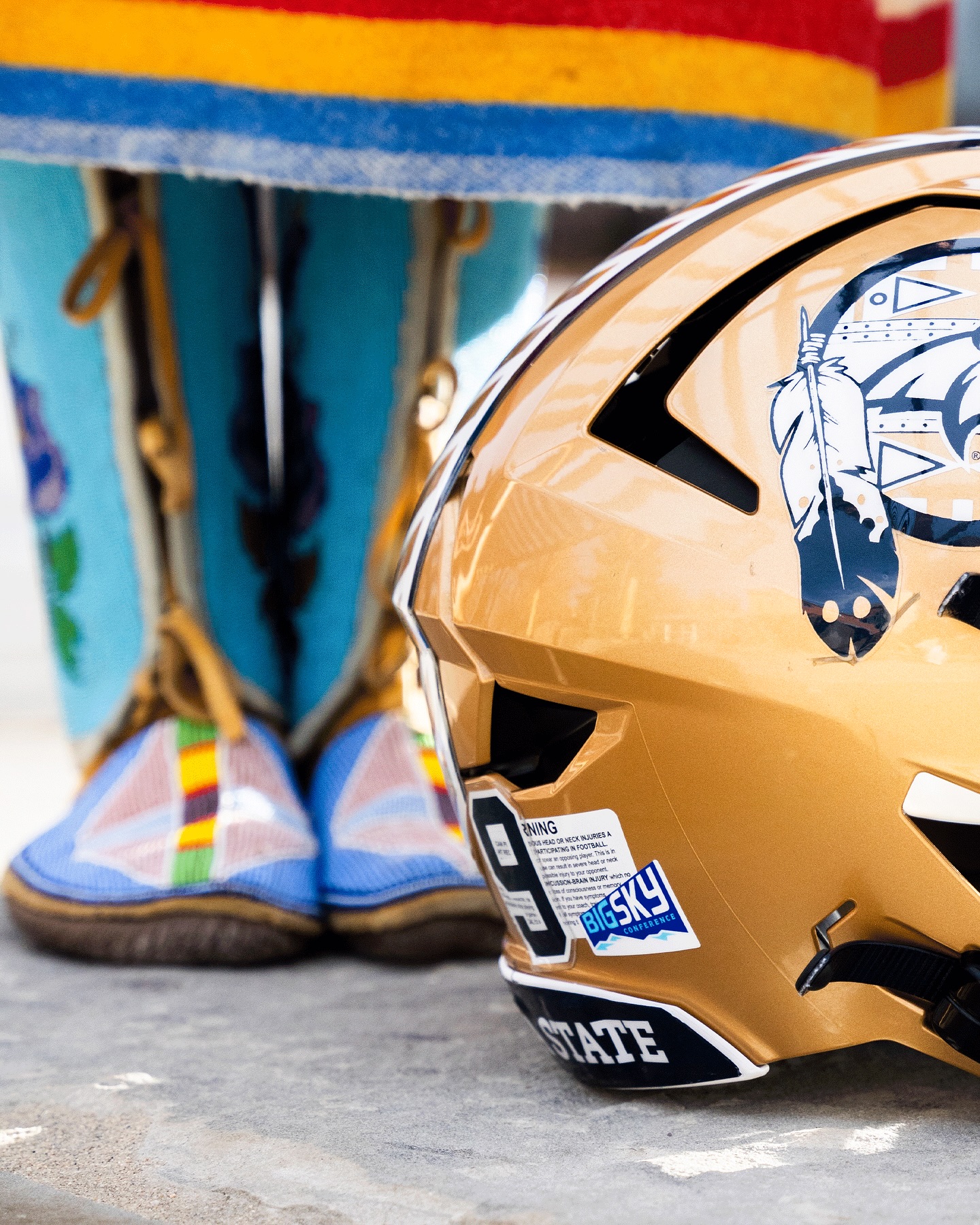
Prior to the game, celebrations included the AIC Executive Council welcoming the football team and coaching staff to American Indian Hall on Veteran’s Day to share about the history of the AIC and recognize the players with an honor song. Player #66, Titan Fleischmann, personally thanked Nicholas Ross-Dick, Assistant Director of AIANSSS, for the invitation and outreach regarding the importance of this game as Fleischmann aspires to be a history teacher for young people.
During the game on November 5th, the AIC Executive Council was recognized on the field with Montana’s Tribal Flags and the Color Guard. Pregame programming included a flag song from the Bobcat Singers and a drone show highlighting the AIC under the Big Sky. In partnership with Bobcat Athletics, students came together to share their dances and songs for a film that aired during halftime of the game with the primary message being "We are still here". This was more than a game.


Click on an image to view as a slideshow.
On the Horizon
Mark Your Calendars! Upcoming NAS Academics and Student Success Events
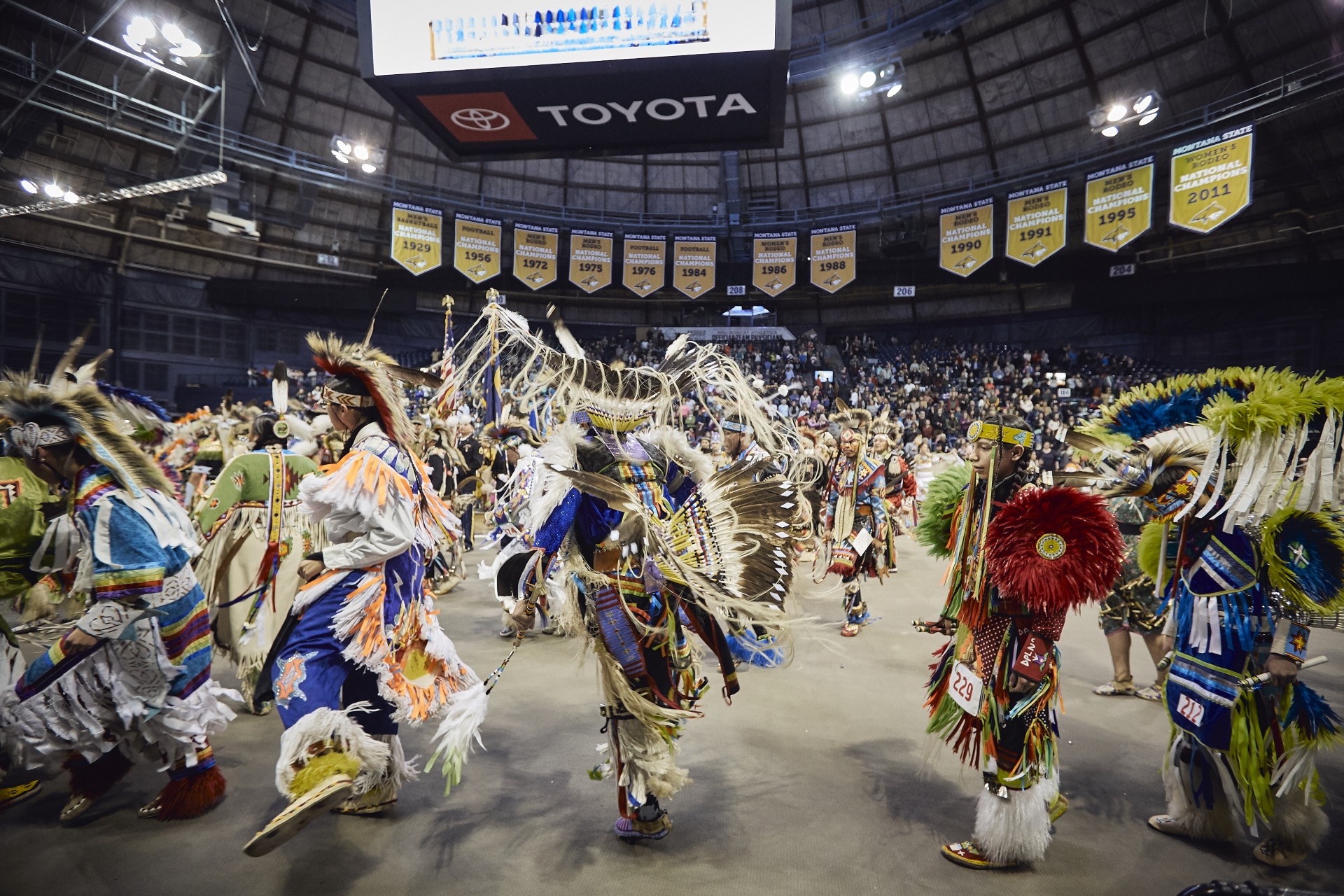
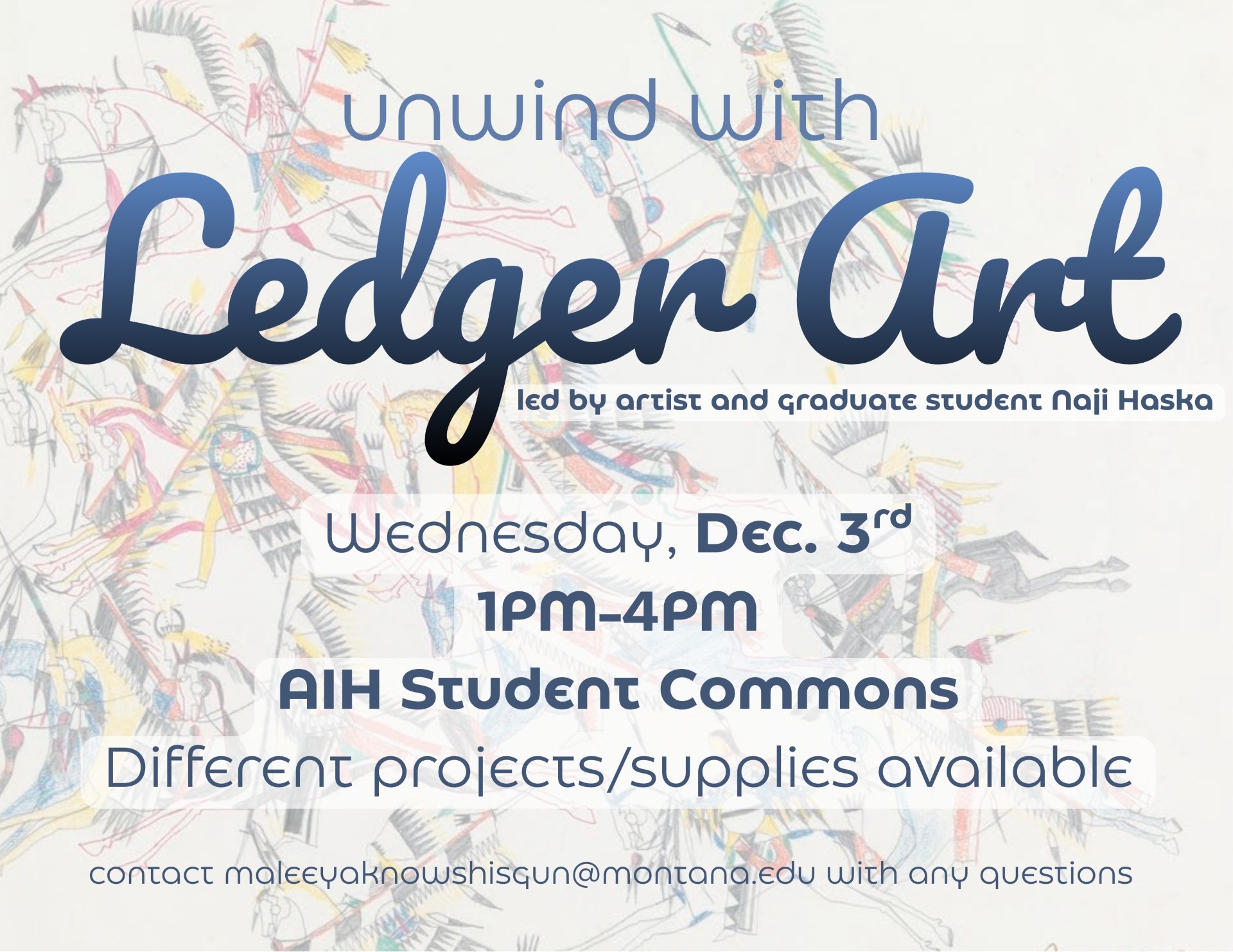
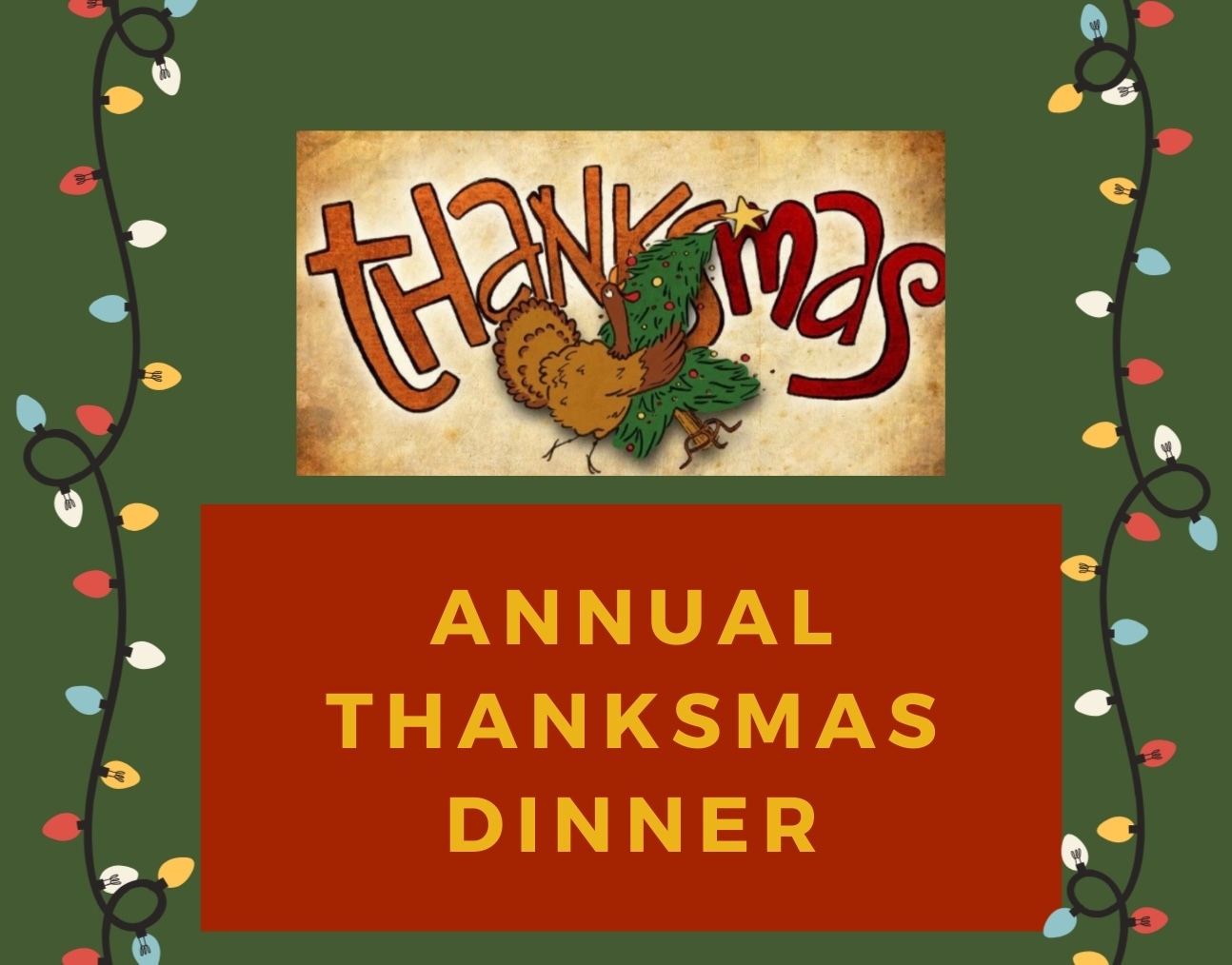
Thanksmas is Here!
It’s time for our annual Thanksmas Celebration! Join us on Thursday, December 4th in the Great Hall of AIH. Contact Lisa Perry, lisa.perry2@montana.edu, if you would like to volunteer to cook.
Interested in Native American Studies?
Thinking about returning to school or pursuing a certificate that complements the work you are already doing for Native communities? Explore our academic offerings and consider enrolling in one of these Spring semester courses:
NASX 541 – Critical Approach to Native American Studies Methodologies
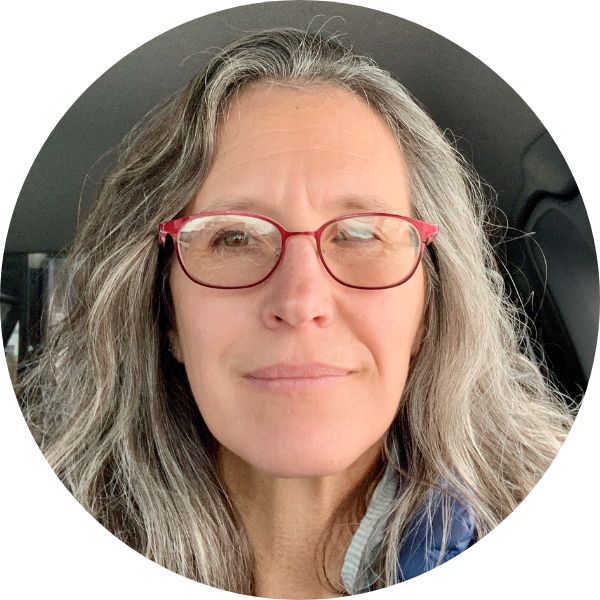
Spring Semester | In-Person | 3 Graduate Credits
Instructor: Dr. Kristin Ruppel
A critical survey of interdisciplinary approaches in NAS, grounded in sociopolitical contexts and focused on the ethical questions that emerge in research involving Native communities. Students receive individualized guidance in developing an effective methodology for their master’s project.
NASX 540 – Theoretical Positions in Native American Studies
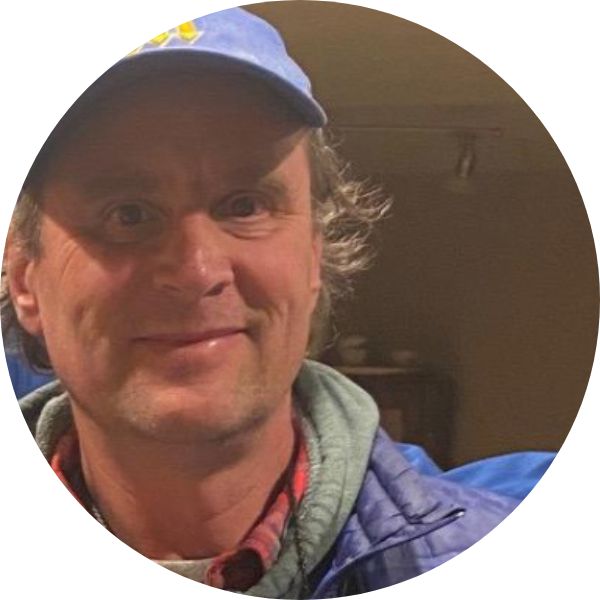
Spring Semester | In-Person | 3 Graduate Credits
Instructor: Dr. Matthew Herman
A graduate seminar exploring key theoretical conversations in Native American Studies. This class incorportates lecture, guest speakers, open discussions, reading circles, student-led sessions, presentations, and film screenings. Concepts covered will include:
- Sovereignty
- Indigenous Science
- Affect Theory
- Pedagogy and Education
- Media, Film, and Visual Culture
- Synthesis and Application
- Decolonization
- Settler Colonial Studies
- Indigenous Literature and Narrative
- Nationalism and Culture
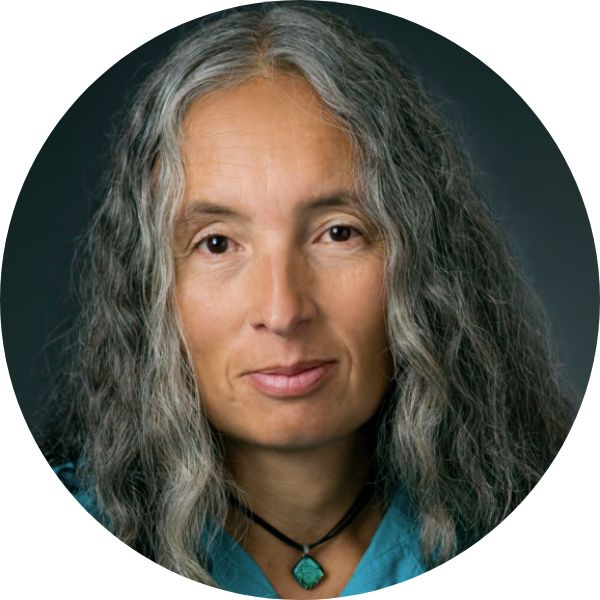
Spring Semester | In-Person | 3 Credits
Instructor: Dr. Anita Moore-Nall
This course offers a survey of Alaska Native perspectives on kinship, time, philosophy, symbolism, spirituality, communication, justice, oral traditions, storytelling, material culture, and the relationship to the environment. The diversity of Alaska Native peoples, languages, and worldviews and how these influence contemporary and global issues are also discussed.
Wisdom in Action
Celebrating Faculty and Student Scholarship
Pacen Peppers, Northern Cheyenne, is accepted to a Master’s Program at the University of Aberdeen in Scotland to begin Fall 2026
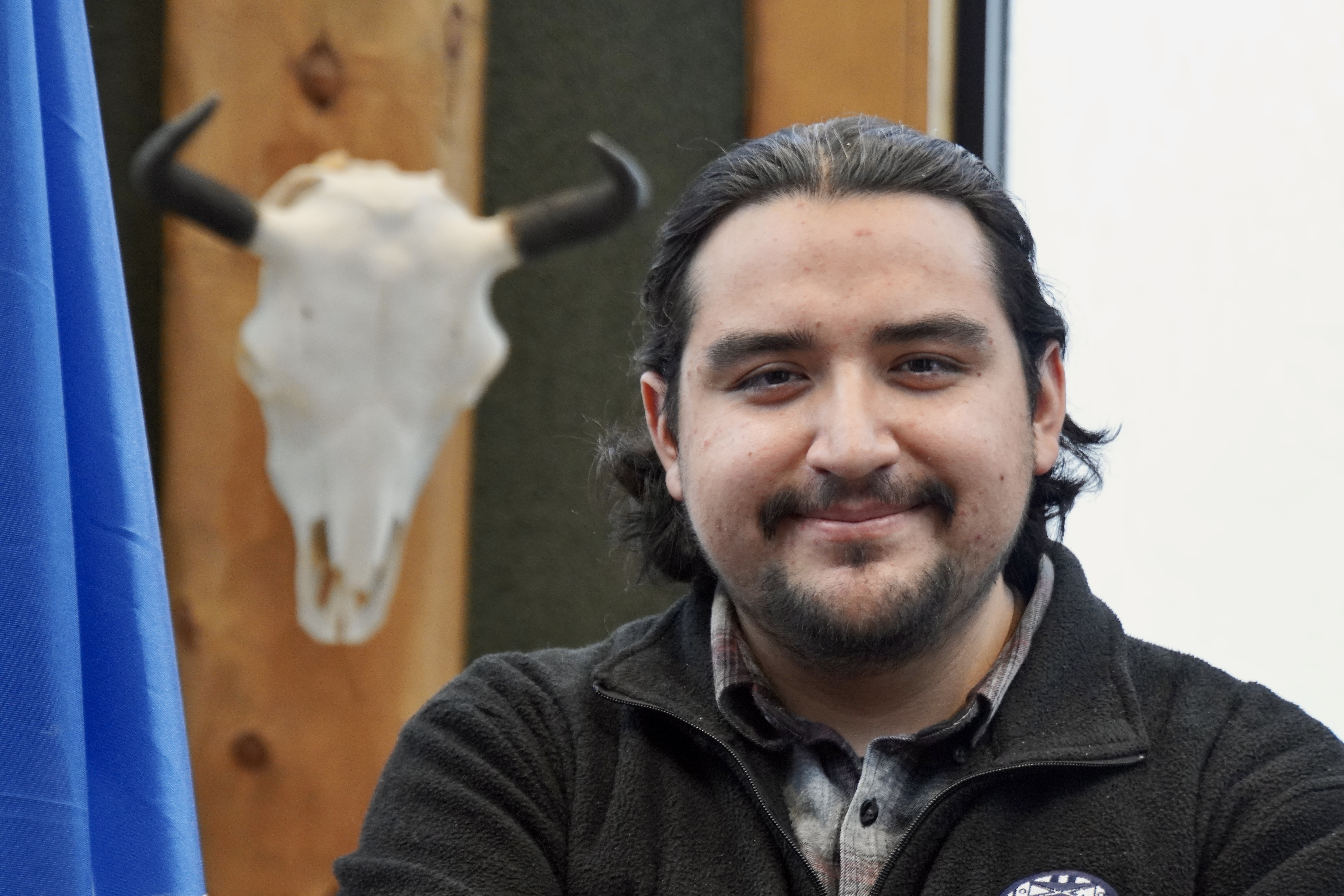
Pacen Peppers, Northern Cheyenne, is a bachelor’s anthropology student in the College of Letters and Science at Montana State University on track to graduate in Spring 2026. Peppers recently learned of his acceptance into graduate school at the University of Aberdeen in Aberdeen, Scotland. During his junior year at MSU, he caught wind of an archaeological site on the west coast of Alaska focusing on Indigenous preservation. Peppers connected with archaeologist Dr. Rick Knecht of the University of Aberdeen who is spearheading the fieldwork in the Yup’ik community in Alaska.
After a semester of communication with Dr. Knecht, Peppers traveled to Quinhagak, Alaska in June 2025 to work at the Nunalleq Museum as a Laboratory and Excavation assistant. While there, he cataloged over 1,200 artifacts and gained valuable experience in conservation work and in photography of artifacts. It inspired Peppers to see the Yup’ik community members excited about seeing and interacting with “the material culture and the art of their ancestors.” Peppers reflected on the community’s enthusiasm for learning how the archaeological record teaches traditional Yup’ik knowledge.
“Outside the lab, I connected with the Yup'ik community where I practiced in subsistence activities such as fishing for salmon and halibut on the rivers and sea as well as local foraging practices. I also was able to connect with older community members through stories from each other's communities and our spiritual beliefs,” said Peppers after his time in Alaska.
Peppers’ advice for students interested in research is “to not be afraid of making connections with archaeologists/researchers and expressing their interest in specific projects and opportunities.” He says, “Putting yourself out there can be very helpful in opening doors to new opportunities.”
Montana State senior Doriane Keiser awarded Rhodes Scholarship
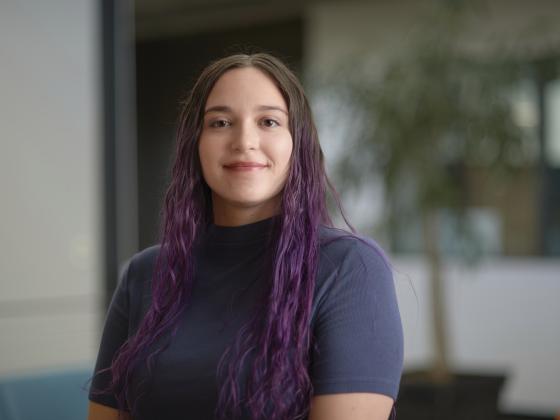
MSU Native American Studies celebrates senior Doriane Keiser, an associate member of the Fort Peck tribes, who has been awarded a 2026 Rhodes Scholarship to study at the University of Oxford. Throughout her time at MSU, Doriane has been deeply involved in Indigenous community initiatives—from mentoring and tutoring Native students to leading cultural and STEM outreach programs. She plans to return to the Fort Peck Indian Reservation to advance mental health services and policy, bringing her academic and cultural experiences home to support her community. Doriane is MSU’s 12th Rhodes Scholar and the first since 2017.
MSU Native American studies receives $2.4 million grant for continued programming and student success services
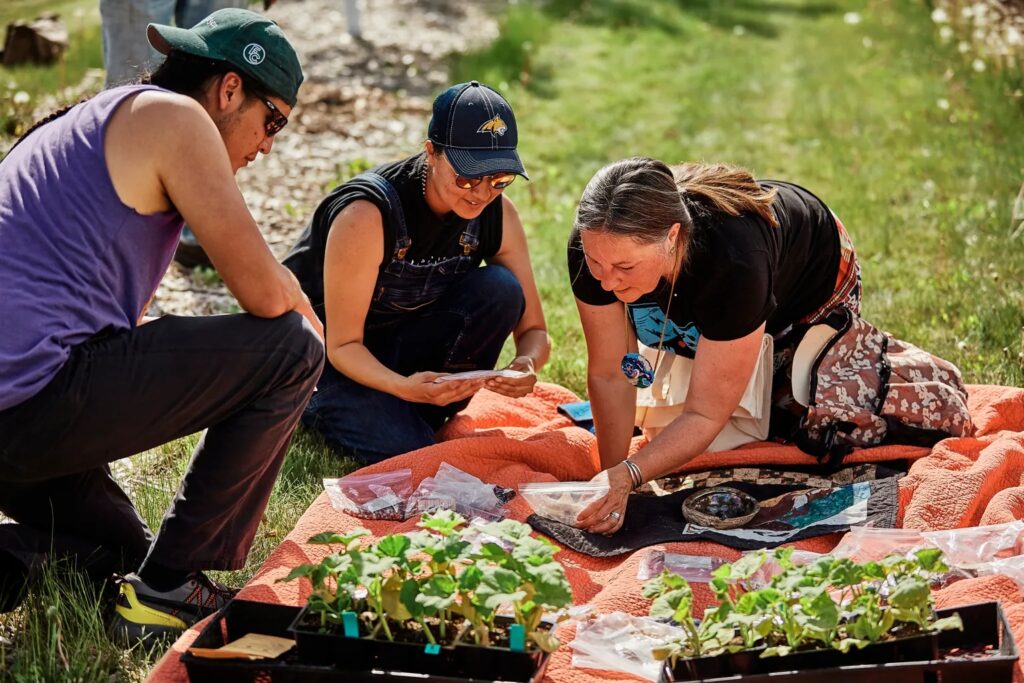
Montana State University’s Native American Studies program has received a renewed $2.4 million grant from Margaret A. Cargill Philanthropies to continue supporting academic and cultural programming for Native students. The funding helps expand mentorship initiatives, cultural enrichment activities, and career preparation, while fostering student engagement, retention, and connection to heritage. Since 2020, first-year Native student enrollment has risen 22%, and graduate enrollment has grown 62%, reflecting the program’s positive impact.
During the first grant period, Cargill funding was allocated to several Department of Native American Studies programming areas: creation of an online Indigenous Food Systems Graduate Certificate; development of the Buffalo Nations Food Systems Initiative, a collaborative project of NAS and EHHD emanating from a research partnership between the Blackfeet nonprofit Piikani Lodge Health Institute and NAS’s Native Land Project; the Elders-in-Residence program, which aims to bridge traditional knowledge with academic pursuits in collaboration with a visiting tribal elder or elders; and increased cultural programming critical to maintaining the department’s accreditation with the World Indigenous Nations Higher Education Consortium, which it received in 2021.


Click on an image to view as a slideshow.
Message from Meredith
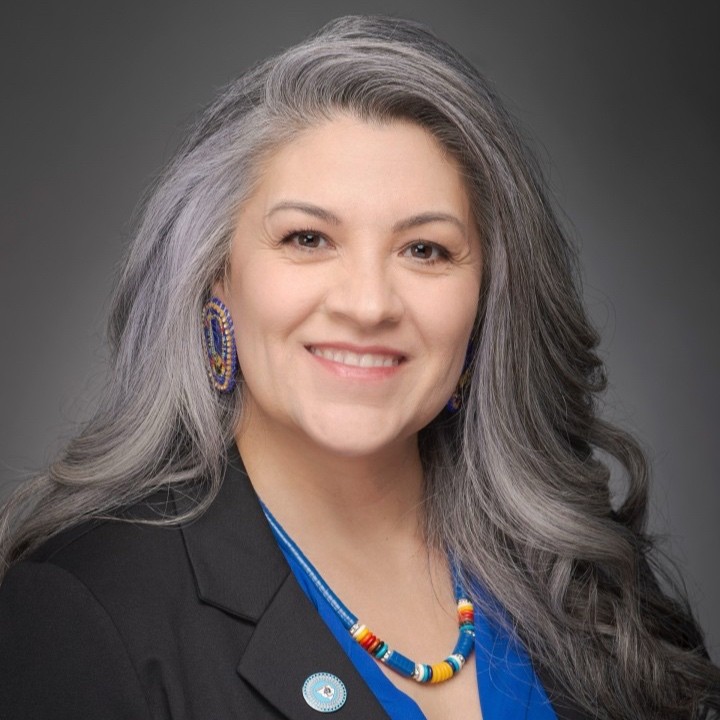
As I begin my journey as Department Head, I am deeply grateful for the strong foundation built by Dr. Walter Fleming, whose leadership and vision shaped Native American Studies at MSU for many years. This newsletter reflects the vibrant work happening in our classrooms, events, and partnerships, from honoring traditions to creating new opportunities for students and alumni. We also want to recognize the important role of parents and families in supporting our students’ success; your encouragement and connection strengthen our community. Donor support is equally vital, helping us expand programs, provide scholarships, and create opportunities that make a lasting impact. Thanks to generous contributions, the Elouise Cobell Arbor Grand Reveal made it possible to bring Elders to bless the space, provide food for guests, and welcome Elouise’s family to the dedication. We are truly thankful that NAS has the support of our community and donors in helping students feel at “home” away from “Home.” Whether you join us at upcoming events, share your stories, or support our programs through a gift, you help us carry this mission forward. Thank you for being part of our circle. We look forward to growing together.
Meredith Hecker, PhD
Natoo Soksitsiko Aaki
Blackfeet
Department Head & Associate Professor
Native American Studies
406-994-5260