
Procrastination: (n) the action of delaying or postponing something 
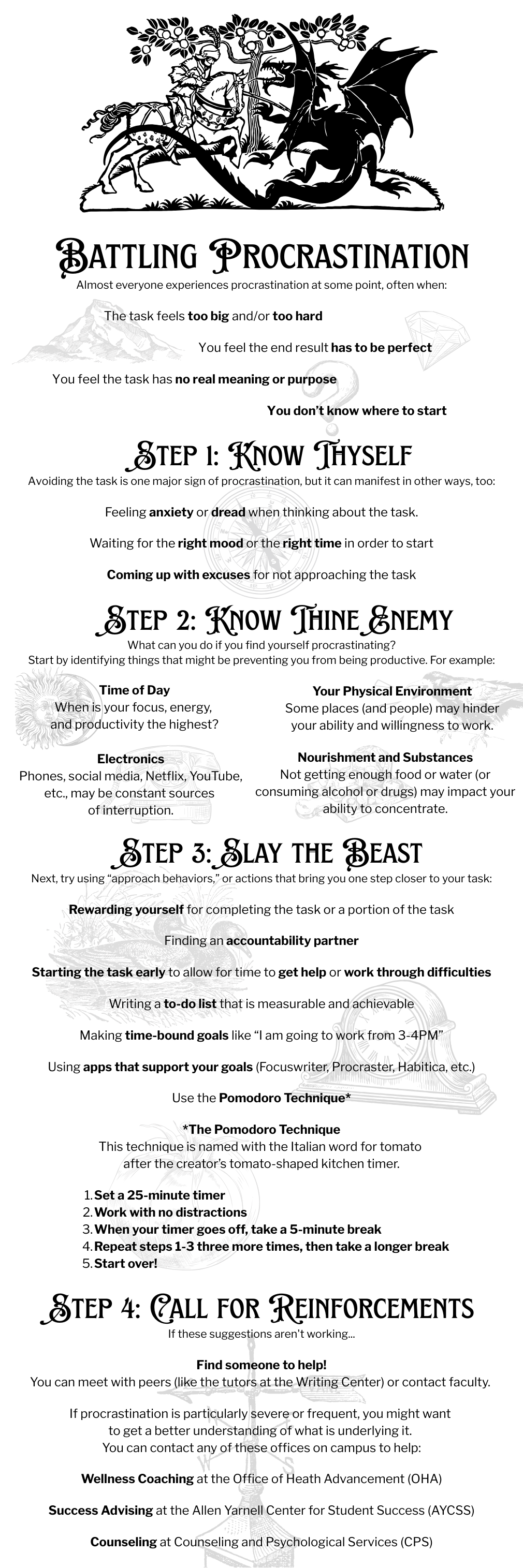
A graphic of a knight battling a dragon with the following text: “Battling Procrastination. Almost everyone experiences procrastination at some point, often when the task feels too big and/or too hard, you feel the end result has to be perfect, you feel the task has no real meaning or purpose, or you don’t know where to start. Step 1: Know Thyself. Avoiding the task is one major sign of procrastination, but it can manifest in other ways, too: Feeling anxiety or dread when thinking about the task, waiting for the right mood or the right time in order to start, or coming up with excuses for not approaching the task. Step 2: Know Thy Enemy. What can you do if you find yourself procrastinating? Start by identifying things that might be preventing you from being productive. For example, Time of Day: When is your focus, energy, and productivity the highest? Your Physical Environment: Some places (and people) may hinder your ability and willingness to work. Electronics: Phones, social media, Netflix, YouTube, etc., may be constant sources of interruption. Nourishment and Substances: Not getting enough food or water (or consuming alcohol or drugs) may impact your ability to concentrate. Step 3: Slay the Beast. Next, try using ‘approach behaviors,’ or actions that bring you one step closer to your task: rewarding yourself for completing the task or a portion of the task, finding an accountability partner, starting the task early to allow for time to get help or work through difficulties, writing a to-do list that is measurable and achievable, making time-bound goals like ‘I am going to work from 3-4PM,’ or using apps that support your goals (Focuswriter, Procraster, Habitica, etc.). Try using the Pomodoro Technique: named with the Italian word for tomato after the creator’s tomato-shaped kitchen timer, this method involves setting a 25-minute timer, working with no distractions, and when your timer goes off, taking a 5-minute break. Repeat these steps three more times, then take a longer break and start over! Step 4: Call for Reinforcements. If these suggestions aren't working, find someone to help! You can meet with peers (like the tutors at the Writing Center) or contact faculty. If procrastination is particularly severe or frequent, you might want to get a better understanding of what is underlying it. You can contact any of these offices on campus to help: Wellness Coaching at the Office of Heath Advancement (OHA), Success Advising at the Allen Yarnell Center for Student Success (AYCSS), Counseling at Counseling and Psychological Services (CPS).”