

Electrical Infrastructure
Overview
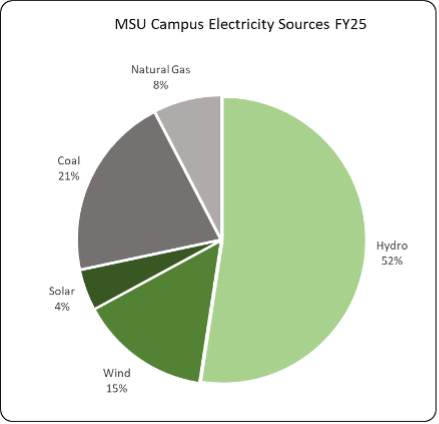
The MSU campus receives electrical power from three sources: Northwestern Energy (70%), Western Area Power Administration (30%) and onsite generation (less than 1%). The published information from Northwestern Energy indicates the power purchased by MSU is 61% renewable. The power purchased from WAPA is from hydroelectric dams and is considered renewable. In FY25, renewable or low carbon sources accounted for 72% of MSUs electrical power.
Infrastructure
The MSU core campus is served by the NorthWestern Energy (NWE) Southside Substation with two substation circuits (circuit 33 and 34). Both circuits and all downstream infrastructure is MSU owned and maintained. The substation circuits terminate into switchgear located at the corner of West College Street and South 11th Avenue and nine underground radial feeders provide distribution at 12.47 kV. The campus distribution system feeders are interconnected to provide redundancy in an emergency. MSU uses Schneider Electric Power Meters and Power Monitoring Expert (PME) software to monitor and collect data for the distribution feeders along with most buildings.
Electric End Use Breakdown
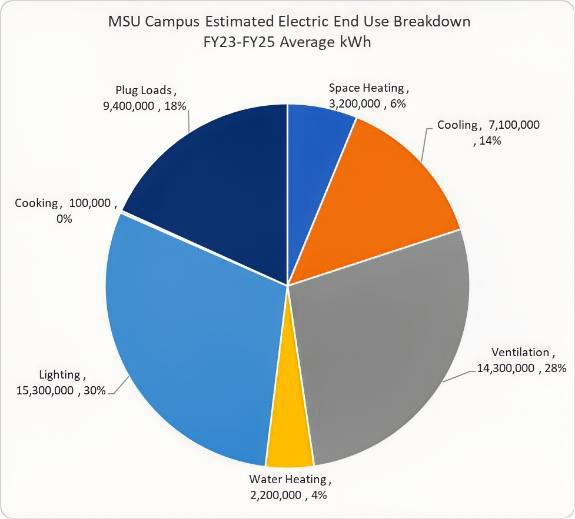
These figures highlight clear opportunities for impact. MSU Facilities Management is actively targeting the campus's largest energy consumers through a comprehensive, campus-wide indoor lighting audit, identifying inefficiencies and implementing upgrades that will meaningfully reduce overall electric consumption. Investments in high-efficiency lighting systems and advanced controls represent some of the highest-return opportunities available and MSU is committed to making them a priority.