

Annual Report 2025-2026
Executive Summary
The Center for Faculty Excellence (CFE) at Montana State University significantly expanded its reach and impact during the 2025–2026 academic year, strengthening support for faculty across teaching, advising, and research. Through new programming, targeted partnerships, and increased engagement opportunities, CFE contributed to a more connected and effective academic community focused on student and faculty success.
Key Accomplishments
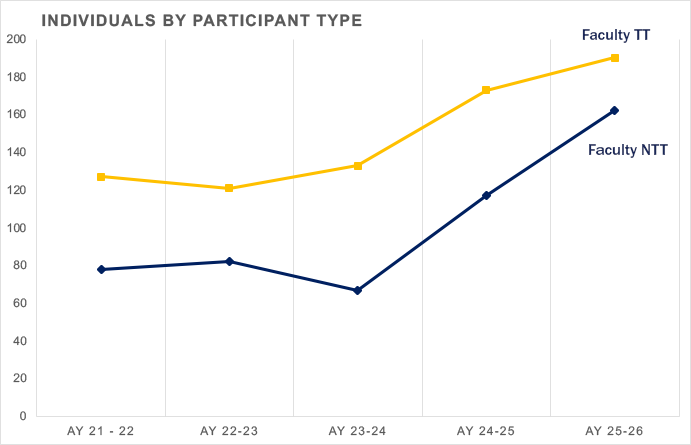
- 111 workshops delivered to 1,178 faculty and staff participants (487 individuals).
- Launched two major new initiatives: AI in the Classroom and Human-Centered Teaching.
- Expanded support for early-career faculty through orientation, mentoring, checklists, and a year-long learning community.
- Increased participation in signature events, including the Faculty Symposium (84 attendees, up from 36 in 2024).
- Strengthened collaborations across campus to support advising, research, and instructional development.
“Course offerings and support through the Center for Faculty Excellence have been essential to my survival and have improved my ability to anticipate and address students’ needs.”
Programs & Participation
Teaching & Learning
Key Achievements:
- 63 workshops | 617 participants
- Launch of 2 new series (AI in the Classroom + Human-Centered Teaching)
- Continued focused support for non-tenure track faculty
This year, we had several new offerings and grouped some of our workshops under new themes. We continued the Canvas support in collaboration with ATO, continued to partner with KEEN, had 146 people complete the TOPS Basic Course, and paired a Syllabus 101 course on the day after new faculty orientation.
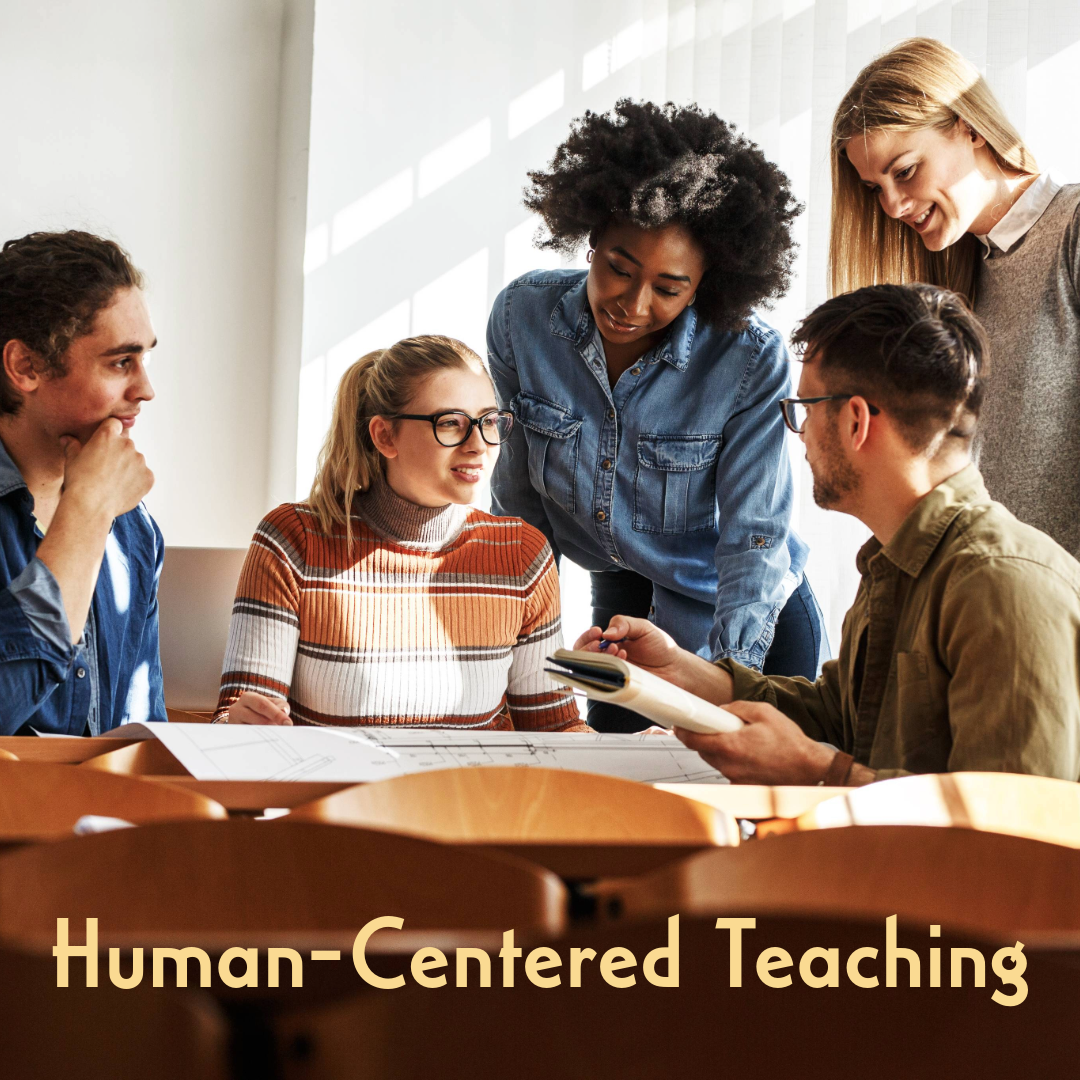
- Human-centered teaching recognizes that learning happens most effectively when courses are designed with transparency, accessibility, and engagement in mind – and when instructors are supported in navigating the real challenges of classroom life. Under this theme, we offered: Syllabus 101, Mental Health in the Classroom, Accessibility 101, Challenging Classroom Scenarios, Suicide Prevention and Awe as Inspiration.
- In the AI in the Classroom series, we put together several workshops that helped faculty explore AI in the classroom (introduced through a podcast): Curiosity before Conclusions: Talking about AI, Cognition before Convenience: Limiting AI Use and Integrating AI into Assignments and Assessments.
In response to faculty needs, we also implemented the following resources:
- Group Work and Team-Based Learning
- Classroom Guidebook from University Facilities
- AI Assignment Examples Showcase
- Canvas Corner to our newsletter to highlight tips for Canvas
As a follow-up to the Faculty Symposium, we also offered a separate workshop, Metacognition in Action: Classroom Strategies that Improve Learning, with Nick Soderstrom from Psychology.
Impact
AI in the Classroom Series |
Human-Centered Teaching Series |
|
100% of 7 respondents agreed that the time they invested in the workshops was well spent. Feedback Themes:
|
97% of 36 respondents agreed that the time they invested in the workshops was well spent. Feedback Themes:
|

Instructional Innovation Grants
The Center awarded the following grants for instructional innovation:
- Elizabeth Arnold, Department of Mathematics: “Make mathematics with us: 3D printing to expand students’ mathematical understanding”
- Victoria Burchill, School of Art: “Engraving: An Iconic Western Motif”
- Jayson Nissen, Department of Physics: “Bridging Research and Practice: Evidence-Based Instruction with the Learning Assistant Model”
“As a new faculty member at Montana State University, participating in the Center for Faculty Excellence (CFE) trainings has been one of the most impactful components of my first year of teaching. Each session, particularly those within the New Faculty Orientation program and following trainings, provided not only practical tools but also a deeper understanding of the student population I serve. More importantly, these trainings reshaped how I approach teaching—moving from simply delivering content to intentionally designing meaningful learning experiences.”
Advising

During the academic year, a series of advising-focused professional development efforts increased campus-wide awareness and engagement with advising resources at MSU.
- Academic Advising 101 (offered each semester)
- Faculty Symposium, “Mapping Success: mentoring and advising as pathways to student self-discovery.”
- Advising Corner in the CFE Newsletter.
“The thoughtful walk through that linked our advising goals to specific strategies was VERY well thought out and appreciated.”
Research & Creativity
Key Achievements:
- Supported 31 faculty through the Faculty Excellence Grant Program
- New writing support mechanism called “Writer’s Roundtable” with the MSU Writing Center
- co-sponsored both the Consider and Prepare for Community Relevant Research workshop and an introduction to implementation and dissemination sciences with the Center for American Indian and Rural Heath Excellence (CAIRHE).
“The FEG grant has been such invaluable support for me over the years and I am grateful for its very existence.”
Early Career Faculty Success Program
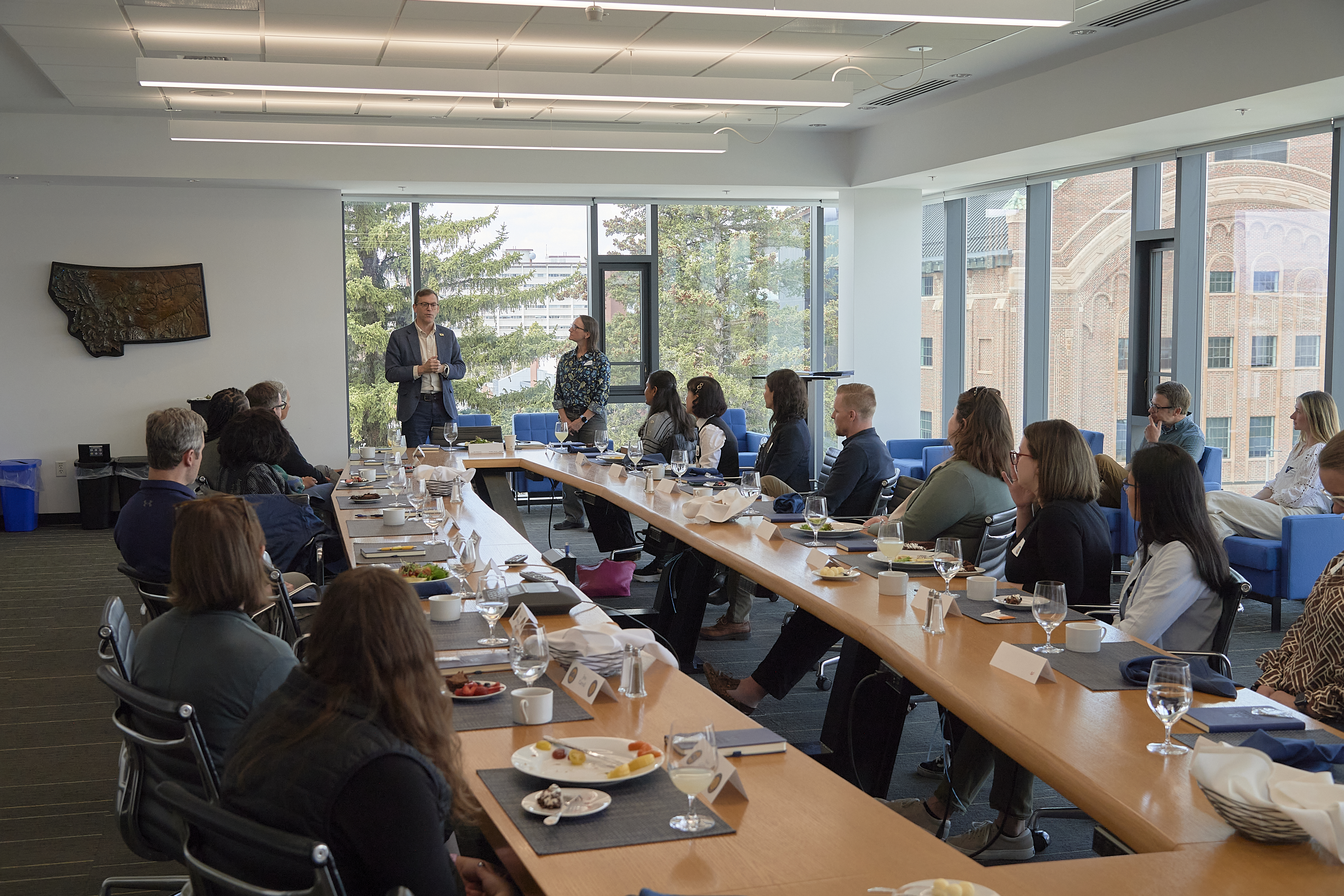
The Early Career Faculty Success Program supports new faculty as they transition into their roles at Montana State University, helping them build confidence, connection, and a strong foundation for long-term success.
Key Achievements
- Provided structured onboarding through New Faculty Orientation and clear success checklists
- Connected faculty to mentors, peers, and collaborators through a formal mentoring program and learning community
- Offered ongoing professional development across teaching, research, and service
- Fostered a sense of belonging and engagement within the MSU community
Through a coordinated set of resources and programs, the Early Career Faculty Success Program helps faculty navigate institutional expectations, develop effective teaching and research practices, and build meaningful professional networks. Participants report increased confidence in their ability to connect with colleagues, identify collaborators, and plan for career growth.
“Heading into [the ‘Successfully Cultivating Your Network of Mentors, Sponsors, and Collaborators’] session, I was feeling quite overwhelmed and unsure of myself in terms of networking and finding collaborators outside of my department. Thankfully, the session quelled my concerns and gave me a much-needed confidence boost. I am considerably more optimistic about my abilities to find collaborators, reach out to them, and develop a plan based on our shared interests.”
Early Career Faculty Learning Community
This year-long learning community consists of monthly 1.5-hour sessions structured around a central theme connected to MSU’s strategic plan and complemented by webinars from the National Center for Diversity and Development, workshops throughout the month on different topics highlighted at New Faculty Orientation.
“These [Early Career Faculty Learning Community] sessions were great for connecting me to other faculty members and various staff members with whom I will interface with in different capacities…Developing a relationship with the Center for Faculty Excellence and having an awareness of all the helpful resources makes the workload much more approachable.”
Learning Communities
Key Achievements:
- 30 sessions | 262 participants
Faculty benefit from participating in learning communities because they create opportunities for meaningful collaboration, shared problem-solving, and professional growth across disciplines.
- Teaching Sustainability
- Women in STEM
- GATHER
- First Generation Book Club
- Early Career Faculty Success
- University Seminar Coordinators & Faculty
- KEEN and the Montana Engineering Education Research Center
- Summer Institute: Creating Belonging and Community in Large Classes
- Writing Roundtables
Thank you to Our Partners!
Partner |
Project |
|
Academic Technology |
Canvas and other educational technology support |
|
ROADS – Collaborate on expertise database to connect faculty to other faculty around research and outreach. RCI – Collaborate on use and advertisement of CatChat, MSU’s internal AI tool. ORD – Collaborate on processes for faculty recruitment. Undergraduate Research – Mentoring training in preparation for summer research experiences. |
|
|
Office of Sustainability |
Learning Community around incorporating sustainability into the classroom |
|
Office of Disability Services and Accessibility in the Library |
Workshops on Accessibility |
|
Registrar’s Office |
Lunch with the Registrar’s office for new faculty and intro to navMSU |
|
Advising Commons |
Advising Corner in the newsletter and Advising 101 workshops |
|
MSU Writing Center |
Writing Roundtables multiple times each semester |
|
Counseling and Psychological Services |
Workshops around student and faculty mental health |
|
Provost’s Office |
New Faculty Orientation, Faculty Symposium, and the Summer Institute |
|
President’s Office |
New Faculty Orientation, Lunch with New Faculty and Faculty Achievement Celebration |
List of Workshops from 2025-2026
Workshop Index By Subject Area
Teaching & Advising
Research & Scholarship
Workshop Index By Date