


The Great Crow Hop Dancer Remembers
Reading Guide
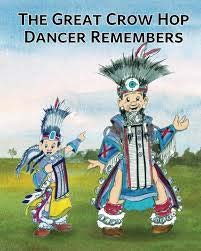
By: A.J. Otjen and Franco Littlelight
Illustrated by Zackery BirdFaraway
About this Program
The MSU Extension Alzheimer's Dementia Awareness for ChildrenStorybook program is designed to teach children about a form of dementia.
The goals of the program are:
1) increase awareness and knowledge about Alzheimer’s (a form of dementia) and
2) provide supportive resources to children and families when they have a loved one
diagnosed with Alzheimer's.
The authors of this reading guide are:
- Ocean Jones, Montana State University Hilleman Scholar
- Keri Hayes, MSU Extension Program Assistant
Brief Summary
In Apsaalooke, the Crow fair marks the end of summer. Sacred River is excited to
do the Crow Hop dance. He hopes the Crow Hop dance will help his grandmother’s brother,
Big Turtle, remember him, since Big Turtle has been having trouble remembering Sacred
River's name. When Sacred River shows Big Turtle his dance before the powwow, Big
Turtle does not know who Sacred River is and yells at him. Sacred River is worried
that Big Turtle does not remember
him or the traditions of their culture. He tells his mom about his worries. She tells
him that Big Turtle has a Disease called Alzheimer's. When Big Turtle and Sacred River
arrive at the powwow, Big Turtle is confused. When he hears the drums start, he begins
to sing and dance with Sacred River. Sacred River says that he will honor his family
and continue the Crow Hop dance just like Big Turtle taught him.
Questions to Ask
- What lesson did the story teach?
- What character reminds you of someone in your family?
- What traditions are important to your family?
- Pg 8: Describe the brain with Alzheimer's disease. Describe a healthy brain.
- Pg 12: What happened to make Big Turtle remember the Crow Hop dance?
Activity Enrichment
- Describe what the words “family tradition” mean to a child. Then create a list of
some of the child's favorite family traditions and place the list on the refrigerator.
- What are ways a child can honor family traditions? This can include cultural practices,
holiday traditions, and spiritual beliefs.
- Ask the child to create their own story that teaches a lesson about kindness, respect,
courage, or community.
- Draw a Family Heritage Tree listing the names of family members and relatives and
include tribal affiliations, if known.
- Ask the child to interview a family member about traditional foods or draw foods important to their family.
Common Reactions
- Sad: A child could feel sad if their loved one with Alzheimer's cannot remember things.
- Irritated: A child could be irritated when they feel like they are not able to help their loved one with Alzheimer's remember things.
- Pride: A child could feel prideful when they are able to continue the memory and traditions
of their loved one with Alzheimer's.
Other Storybooks and Reading Guides
Other Storybooks and Reading Guides can be found at: https://www.montana.edu/extension/alzheimers/booksandreadingguides.html
Funding for purchase of the storybooks in this program have been made possible by
a grant from the Montana Geriatric Education Center at the University of Montana,
AARP Montana, and by the Endowment fund from National Extension Association of Family
& Consumer Sciences (NEAFCS).